


The brands that grow fastest are not the ones buying the most traffic. They are the ones running customer retention strategies that keep first-time buyers coming back. According to research published in Harvard Business Review, acquiring a new customer costs 5 to 25 times more than keeping an existing one, and a 5% lift in retention can raise profits by 25% to 95%.
Repeat buyers also carry a bigger share of the business than their headcount suggests. Gorgias found that repeat customers typically generate 44% of total revenue and 46% of orders. When they buy, they tend to spend more per order than one-time shoppers.
This guide gives you a retention plan built around where customers actually drop off. Here is what you will find inside:
What Is Customer Retention in E-Commerce?
Customer retention is your ability to turn a first purchase into a second, third, and tenth. In E-Commerce, that means repeat orders, active subscriptions, and customers who choose you over a cheaper tab in the same browser. Acquisition gets someone to buy once. Retention decides whether that sale was worth the ad spend.
Retention is rarely won by one tactic. It is won across dozens of small moments: the order confirmation, the delivery update, the return request, the cancellation click. That is why strong E-Commerce customer service sits at the center of every retention program that works.
Why Retention Strategies Beat Acquisition
Cost is the headline, but it is not the only reason to prioritize the customers you already have. Repeat customers create value that new ones cannot, and that value compounds every month they stay.
14 E-Commerce Customer Retention Strategies by Lifecycle Stage
Most lists of customer retention tips treat every customer the same. They are not the same. A first-time buyer needs reassurance, a repeat buyer needs a reason to stay, and an at-risk subscriber needs a conversation. The strategies below are grouped by stage so you can start where you are losing the most customers.
Stage 1 • The First Order
Create A Seamless Shopping And Checkout Experience
Retention starts before the first order ships. Every extra click, surprise fee, or slow mobile page teaches a new customer that buying from you takes effort. The rule of thumb is simple: turn three or four clicks into one or two.
Own The Post-Purchase Experience
The days between checkout and delivery shape whether a customer buys again. Silence breeds "where is my order" tickets and buyer's remorse. Proactive updates and a personal touch turn that anxious window into your strongest loyalty moment.
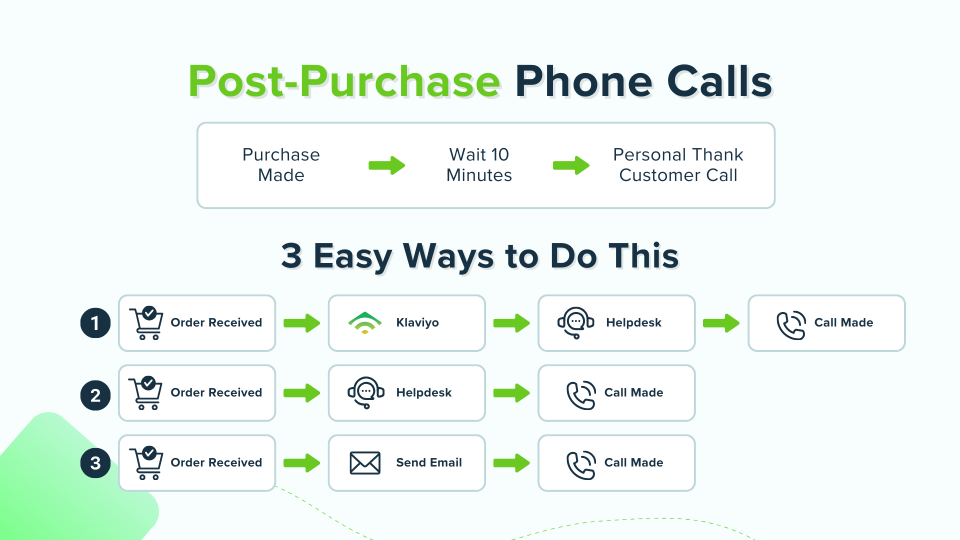
One of the most effective plays is a personal thank-you call placed about 10 minutes after a purchase. It is short, unexpected, and it gives the customer a real person to contact if anything goes wrong.
Humanize Your Brand With Personalized Service
The service experiences customers remember are the ones where someone went above and beyond. Empathy lowers churn, builds referrals, and protects your reputation when something goes wrong. Give your team the freedom to make judgment calls instead of reading from a rigid script.
Stage 2 • The Repeat Purchase
Build Trust With Self-Service Support
Not every customer wants to contact support. Many would rather solve simple problems on their own, especially after hours. A strong help center respects their time and frees your team to focus on the conversations that actually protect revenue.
Pair self-service with automating repetitive tickets like order status and return policy questions. Keep a clear path to a human for anything more complex.
Reward Loyalty Without Training Customers To Wait For Discounts
Loyalty programs work when they reward behavior you want, not when they teach customers to wait for the next sale. Constant discounts shrink margins and attract bargain hunters who leave the moment a competitor goes lower.
Turn One-Time Buyers Into Subscribers
For consumable products, a subscription is the most reliable retention tool you have. It removes the decision to reorder and turns a good product into a habit. The best time to offer it is right after a customer has had a positive first experience.
Personal outreach converts far better than a checkbox at checkout. Brands that invest in dedicated pre-sale and upsell support can offer subscriptions during live chat or follow-up calls, when the customer is already engaged.
Time Replenishment And Cross-Sell Offers With Purchase Data
Your order history already tells you when each customer will run out. Track the average number of days between orders and send reminders a few days before customers need to reorder. Timing beats volume every time.
This matters most for consumables. In food and beverage brands, a well-timed reminder often decides whether a customer reorders from you or grabs something at the store.
Turn Happy Customers Into A Referral Channel
Loyal customers are already recommending you to friends and family. A referral program simply makes that easier and rewards them for it. Customers who arrive through a referral also start with more trust in your brand.
Stage 3 • The At-Risk Customer
Listen To Your Customers And Tag Every Churn Reason
Only 1 in 26 unhappy customers will tell a business about a bad experience. The rest simply leave. That makes every piece of feedback valuable, and it makes the silence worth investigating too.
Go one step further than surveys. Tag every cancellation, return, and complaint with a reason code, the save you offered, and the outcome. Over time, that data shows you exactly what to fix in pricing, product, and shipping.
Intercept Cancellations Before They Go Through
A cancellation request is not a final decision. It is often a problem the customer has not shared yet. When a real person steps in mid-cancellation, many subscribers stay once they hear a better option.
Turn Refund Requests Into Exchanges
A refund ends the relationship. An exchange, replacement, or store credit keeps it going. The key is to reach the customer inside your review window, before the refund is approved.
Shade and fit returns are a common example. Skincare and wellness customers who picked the wrong match are often happy to swap once someone offers to help them find the right one.
Recover Failed Payments Before Subscriptions Lapse
Some of your churn is completely involuntary. An expired card or a declined charge can quietly end a subscription the customer never meant to cancel. These are the easiest saves you will ever make, as long as someone acts quickly.
Resolve Issues Fast On Every Channel
Slow or inconsistent support sends customers looking elsewhere. Zendesk's CX Trends research reports that 85% of CX leaders believe customers will leave after a single unresolved issue. Speed and consistency across email, chat, phone, and social are retention tools in their own right.
Helpdesks like Gorgias, Zendesk, and Gladly give you the omnichannel view. Trained support agents make sure every channel is actually answered, including during seasonal spikes.
Stage 4 • The Lapsed Customer
Win Back Lapsed Customers With One Personal Outreach
A lapsed customer already knows your product. Winning them back costs far less than finding someone new. One personal message from a real person often works better than a string of automated emails.
How a Retention Specialist Runs These Plays
Most E-Commerce brands already own the tools for retention. They have Shopify, a helpdesk, a subscription platform, and a returns app. What they are missing is a person whose entire shift is dedicated to keeping customers, starting with the failed-payment list every morning.
That is the role of a dedicated retention specialist. They become the human layer across your post-purchase journey and run six core plays:
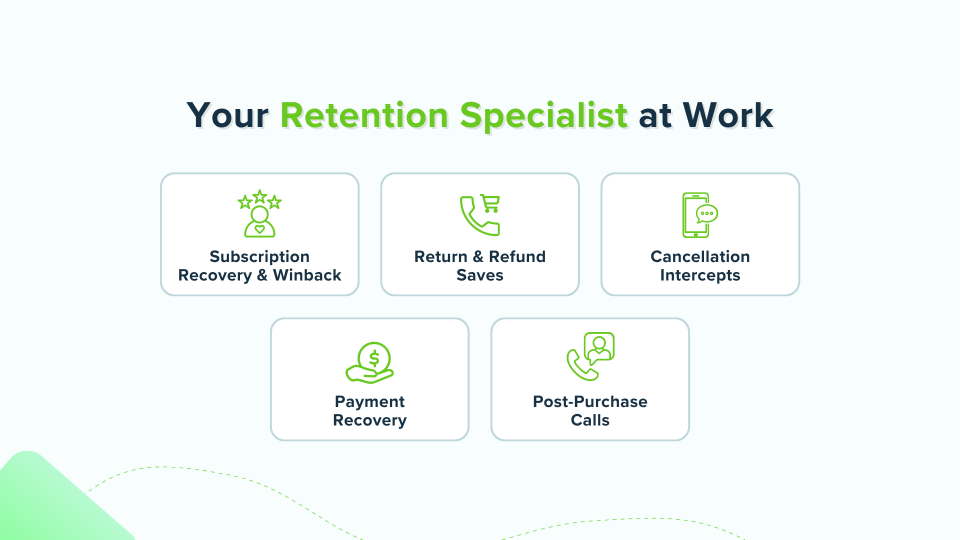
The 5-Step Subscription Save Framework
A great save conversation does not feel like a sales pitch. It feels like help. This five-step framework keeps the conversation focused on the customer's goal, which is exactly why it works.
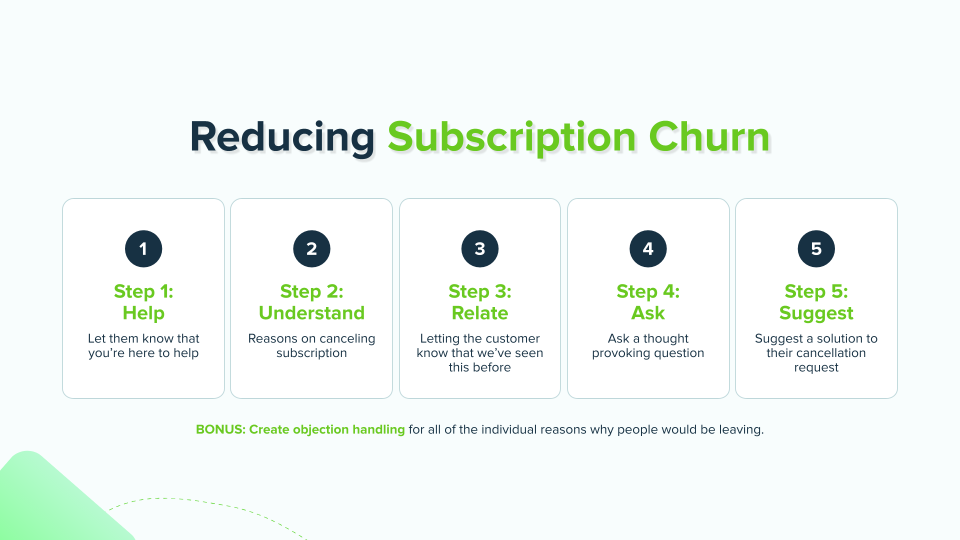
Build Objection Handling for Every Cancellation Reason
The framework works best when your team has a prepared answer for each common reason. Map every objection to the lightest save that solves it. Discounts should be the last lever, not the first.
| Objection | Lightest-Touch Save | Example Line |
|---|---|---|
| "I have too much product." | INTERVAL | "What we could do is decrease your order frequency so you receive it every 45 days instead of every 30. Would that be helpful?" |
| "I'm taking a break from it." | PAUSE | "Would it help if I paused your subscription or skipped your next order, so it's ready when you are?" |
| "I didn't like the taste." | SWAP | "I'd be happy to process a refund, but would you be open to trying a different flavor? I can send it to you completely free." |
| "It's too expensive." | QUANTITY | "Would a smaller quantity or a longer gap between deliveries fit your budget better?" |
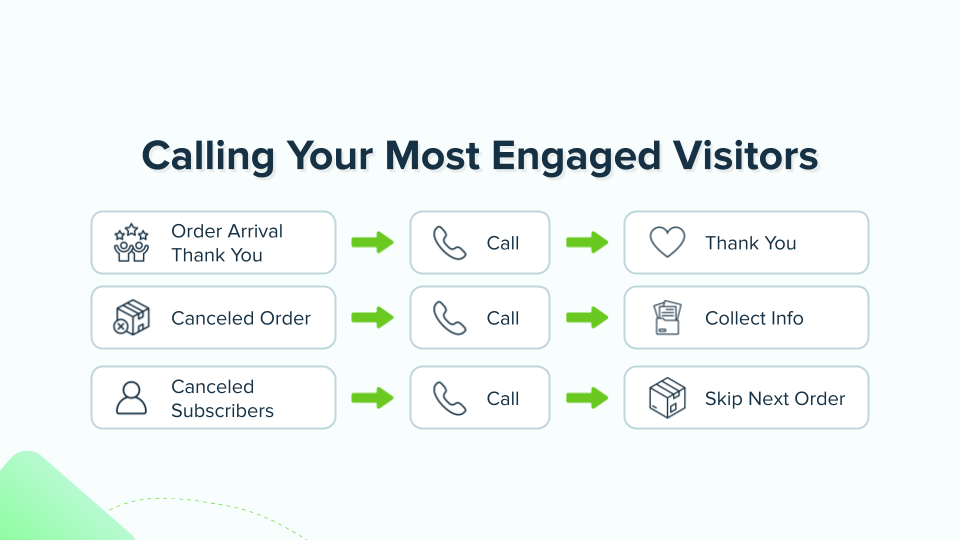
Trigger-Based Retention Calls
The most engaged customers are often the ones about to leave. Certain actions signal that a customer needs a human conversation right now. A retention specialist watches for these triggers and calls within the same day.
Post-Purchase Thank-You Calls in 3 Workflows
A thank-you call about 10 minutes after purchase is simple to set up with the tools you already use. Pick the workflow that matches your stack.
Verified Saves, Not Claimed Saves
A save only counts if you can prove it. Every conversation should be tagged with a reason code, the lever used, and the outcome. That turns anecdotes into a churn report you can act on.
A retention specialist works inside the tools you already run, including Shopify, Gorgias, Recharge, Loop Returns, Route, and Consio. Weekly and monthly reports show what was saved and why customers are leaving, so your team can fix issues upstream.
What a Retention Specialist Delivered in 30 Days
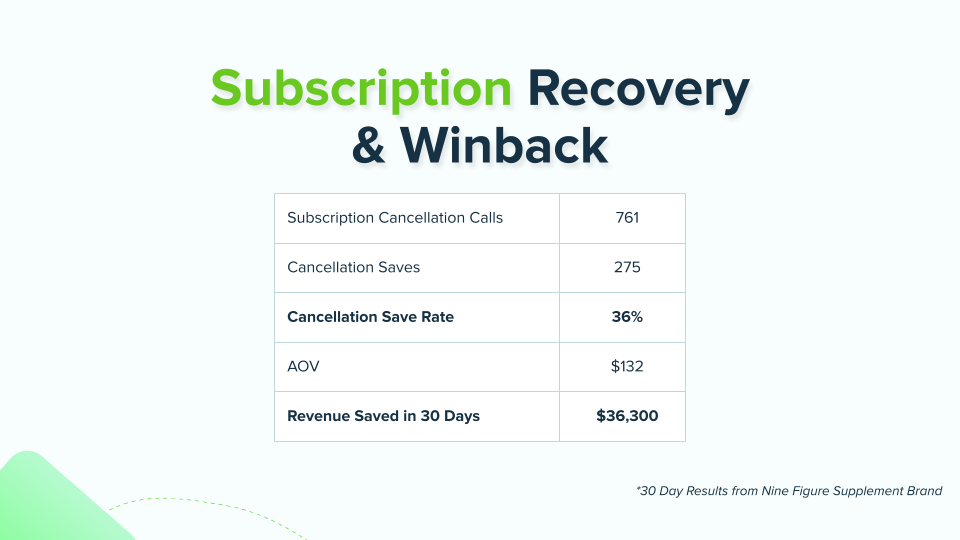
Here is what the save framework produced for a nine figure supplement brand over a single 30-day period. More than a third of subscribers who called to cancel chose to stay.
Common Mistakes That Stop You From Improving Customer Retention
Good retention strategies fail when the execution undercuts them. Watch for these mistakes as you build your program.
How to Retain Customers: A 5-Step Retention Plan
You do not need to launch all 14 strategies at once. Start with the stages where you lose the most customers, then build from there.
Map Where Customers Drop Off
Pull your repeat purchase rate, churn rate, and cancellation reasons by cohort. Look for the stage with the steepest drop. That is where your first plays belong.
Pick Three Plays That Match Those Drop-Offs
Choose no more than three strategies to start. If subscribers churn, begin with cancellation intercepts and payment recovery. If first-time buyers never return, start with the post-purchase experience.
Set Your Baseline Metrics
Record your current numbers before you change anything. Without a baseline, you cannot prove a play is working or justify expanding it.
Give Retention A Dedicated Owner
Retention plays only work when someone runs them every single day. A dedicated retention specialist owns the failed-payment list, the cancellation queue, and the return requests. They also keep the reporting honest.
The right fit matters. Look for a specialist who already knows your platforms and customer segments. They should also have completed structured training, such as 20 hours of onboarding and passing written and oral assessments, before they ever speak to your customers.
Review Cohorts And Churn Reasons Monthly
Meet once a month to review saves, churn reasons, and cohort trends. Feed what you learn back into pricing, product, and shipping. Then add your next play.
Stop losing customers you already paid to acquire. A dedicated Retention Specialist runs your saves, win-backs, and payment recovery every day, inside the tools you already use.
Core Metrics: Retention rate increased by 5% through proactive subscription cancellation deflection. The team also handled more inbound calls than the brand's internal team.
"Switching to TalentPop, we saved so much money AND our results have improved so dramatically!"
Kate Dalton, Director
Need Help With Customer Service?
Book a call with one of our specialists today to see how TalentPop can assist you with putting together a solution for your customer service needs.
Book a CallNeed Help With Customer Service?
We're elevating customer experiences at 500 top E-Commerce brands (and counting). Let's see what we can do for you!
Get Started


