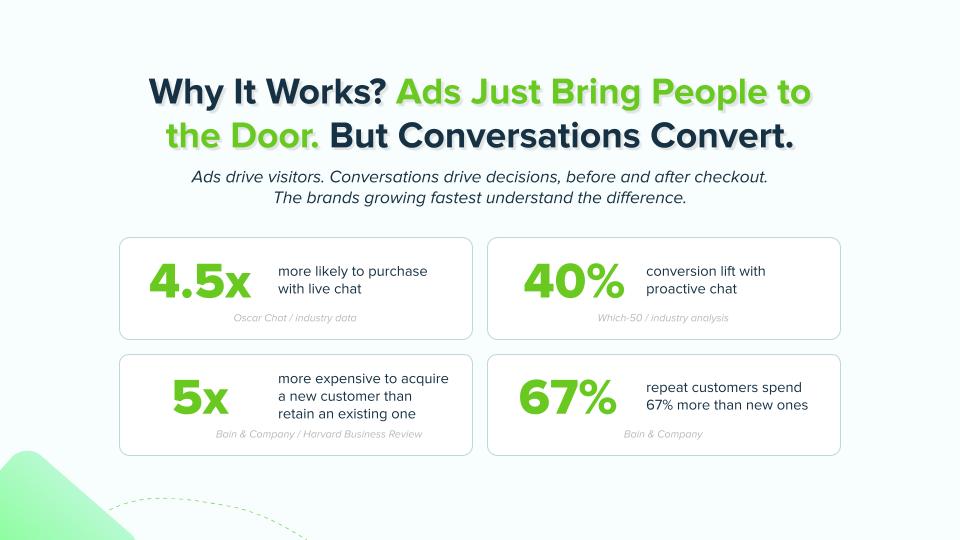
Most support teams measure success by how fast they answer. Proactive customer service flips that standard, because the best outcome is a conversation that starts before the customer ever needs one. Industry analysis puts the conversion lift from proactive chat at roughly 40 percent per Which-50 industry analysis, which means the question is no longer whether proactive outreach improves satisfaction. It is how much revenue your brand is leaving on the table by waiting.
For E-Commerce brands, that gap is expensive. Every abandoned cart, every silent cancellation, and every hesitant shopper on a product page is a conversation that never happened. This guide covers:
What Is Proactive Customer Service?
Proactive customer service is any action your brand takes to address a customer need before the customer contacts you. Reactive service starts when a shopper reaches out. Proactive service starts when your team reaches out first.
The trigger is the real difference. Reactive support waits for a ticket. Proactive support watches for a behavioral signal, then acts on it: a cart sitting idle, a subscription cancellation in progress, a delivery exception, a shopper who has viewed the same product three times without buying. That distinction matters more than it sounds, because most unhappy customers never file a ticket at all.
The Silent Majority Problem
A customer experience survey conducted by a former Gartner analyst found that only 1 in 26 customers will voice a concern about a business. The other 25 say nothing. They do not escalate, they do not complain, and they do not give you a chance to fix it.
They just stop buying.
Reactive support, by design, can only serve the one customer who spoke up. Every improvement you make is based on the loudest fraction of your customer base. Proactive customer service is how you reach the other 25, and it is why brands that only measure response time are optimizing for a channel that most of their customers never use. For a deeper look at what silent customers are actually telling you, our post on negative customer feedback covers how to act on what surfaces.
Proactive vs Reactive Customer Service: When to Use Each
Neither approach replaces the other. Reactive support is your safety net. Proactive support is your growth lever. Here is how they compare across the dimensions that matter operationally:
| Dimension | Reactive Customer Service | Proactive Customer Service |
|---|---|---|
| Who makes the first move | Customer contacts you | You contact the customer |
| Timing | After the problem surfaces | Before the problem surfaces |
| Primary trigger | Inbound ticket, chat, or call | Behavioral signal (cart abandonment, cancellation intent, browse depth, delivery exception) |
| Main objective | Resolve and restore trust | Prevent friction and capture intent |
| Core metrics | FRT ART CSAT | CVR AOV Save Rate Recovered Revenue |
| Best-fit moments | Order issues, defects, returns, escalations | Checkout hesitation, cancellation flows, post-purchase gaps, browse abandonment |
| Cost profile | Scales with ticket volume | Scales with revenue influenced |
| Risk if missing | Slow recovery, churn after a bad experience | Silent drop-off, revenue lost with no ticket ever filed |
Read the bottom row again, because it is the entire argument. A weak reactive function produces complaints you can see. A missing proactive function produces losses you cannot, since nobody files a ticket to tell you they decided not to buy. The practical rule: run reactive support to protect the customers you have, and run proactive customer service to convert the ones you are about to lose.
Why Proactive Customer Service Converts
The economics behind proactive outreach are not subtle. Acquisition keeps getting more expensive, retention keeps getting more valuable, and the moment a shopper is already browsing your E-Commerce store is the cheapest moment you will ever have to influence them.
Retention Costs Less Than Acquisition
Acquiring a new customer runs roughly five times more than retaining an existing one, and repeat customers spend approximately 67 percent more than new ones. Those two numbers together reframe what a support team is for. If a save call keeps a subscriber, you did not avoid a ticket. You protected a customer worth multiples of the one your ad spend is chasing.
Conversations Close What Ads Only Open
Paid traffic gets a shopper to the page. It does not answer the sizing question, clarify the return policy, or reassure someone hesitating over a first order. A conversation does. That is why proactive chat outperforms passive chat so consistently. The shopper who needed help but was never going to click a chat bubble is the one who leaves without buying and without telling you why.
7 Proactive Customer Service Examples That Move Revenue
Most articles on this topic stop at notifications and knowledge bases. Those matter, but they are deflection tools, not revenue tools. The plays below are the ones a dedicated E-Commerce Sales Specialist runs day to day, and each one maps to a specific moment where intent is high and the customer is about to slip away.
Abandoned Cart Calls
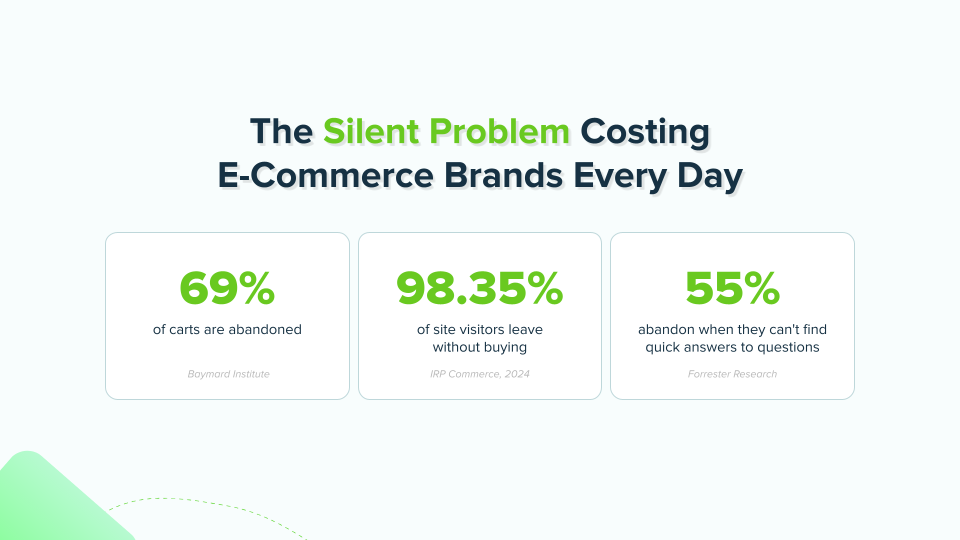
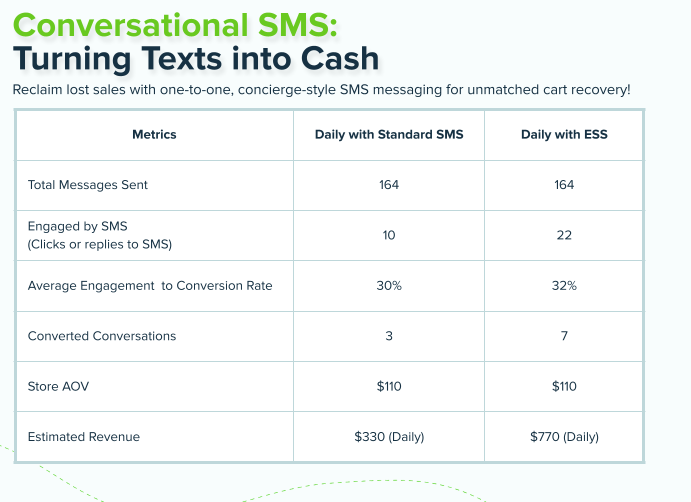
An abandoned cart is the clearest buying signal a shopper can send. They picked the product, entered the flow, and stopped. Automated cart emails treat everyone identically, which is why their reply rates stay flat. A one-to-one conversation performs differently. When outreach is concierge style rather than templated, engagement roughly doubles on identical send volume.
Convert Customers Into Subscribers
A one-time buyer who reorders manually every six weeks is a subscriber who has not been asked. Most brands surface subscription offers only at checkout, where the shopper is focused on completing a purchase rather than committing to a recurring one. Proactive outreach catches them at a better moment: after the second or third repeat order, when the habit is already proven and the ask is obvious.
Order Cancellation Saves
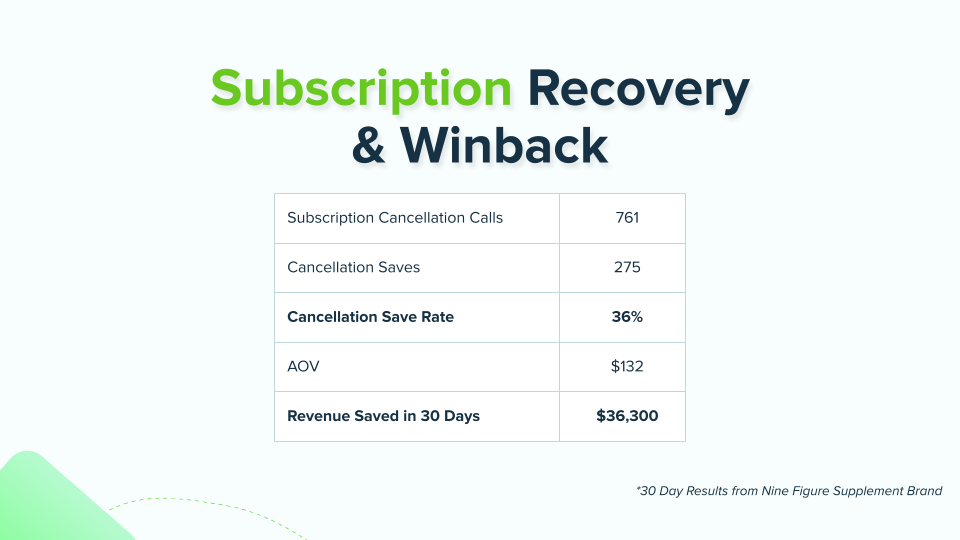
Cancellation is the highest-intent churn signal in E-Commerce, and most brands process it as an administrative task. A cancellation request routed through a form is a customer you agreed to lose without a conversation. Handled proactively, that same request becomes a save opportunity. Often the underlying issue is timing, quantity, or budget rather than the product itself, and all three are solvable on a call.
Personalized Follow-Ups
The window between delivery and second purchase is where most brands go quiet. A follow-up that checks whether the product arrived, fits, or performed as expected does two jobs at once: it surfaces problems that would otherwise turn into silent churn, and it opens a natural path to the next order. The key word is personalized. A generic "how did we do" blast is a survey request. A message that references the specific item, the use case, and the timing is a conversation.
Live Chat Campaigns
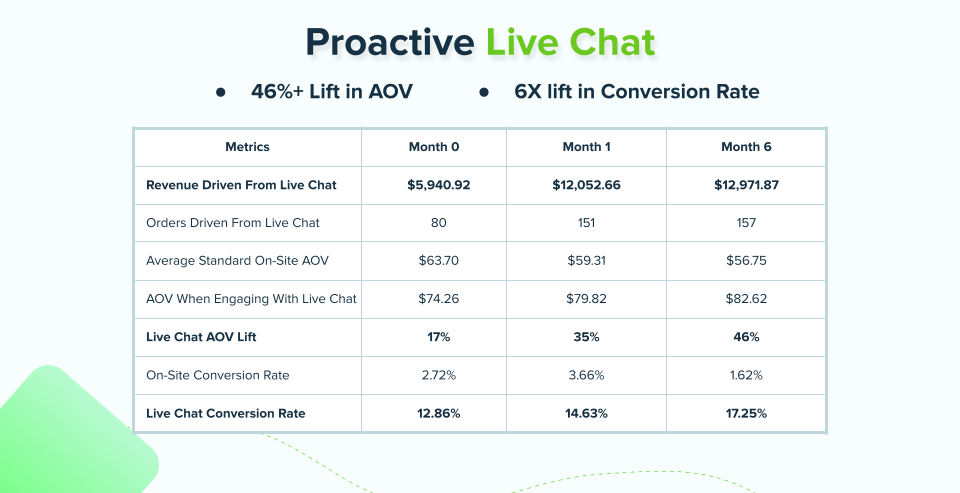
Passive live chat waits for the shopper to click. Proactive live chat opens on the pages and behaviors where hesitation is measurable: extended time on a product page, repeat visits, high-value carts, or the sizing and shipping pages where questions cluster. The performance difference is not marginal.
Personalized Upselling and Cross-Selling
Algorithmic product recommendations work on patterns. A specialist works on context: what the shopper actually said they needed, what they already own, and what genuinely pairs with it. That context is why proactive upselling raises AOV without reading as a sales push. A recommendation that follows a real question feels like service. The same recommendation served by a widget feels like an ad.
Social Media Outreach
Comments and DMs are where customer problems become public. A shipping complaint sitting unanswered under a paid post is not a support ticket, it is a conversion objection being read by everyone else in the audience. Proactive social outreach means monitoring those surfaces and responding before the thread builds momentum. It also means treating pre-purchase questions in comments as the buying signals they are, since someone asking about fit or delivery timing under an ad is close to ordering.
What Proactive Customer Service Delivers at Scale
Individually, each play looks like a small operational adjustment. Run consistently across a customer base, the aggregate numbers tell a different story.
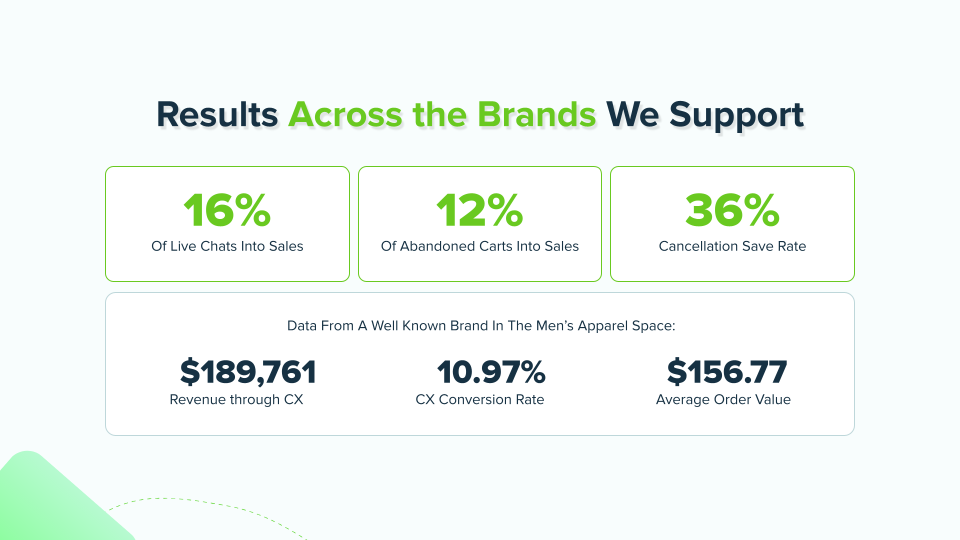
Roughly one in six live chats and one in eight abandoned carts converting into orders is a conversion channel, not a support metric. Layer the 36 percent cancellation save rate on top and the function is defending revenue on both ends of the customer lifecycle. None of these numbers appear in a first response time report. That is the measurement gap proactive customer service has always carried, and fixing it is the first step toward treating the function as what it actually is.
Common Proactive Customer Service Mistakes
Proactive programs usually fail for operational reasons, not strategic ones. These are the failure modes worth designing around before you launch:
How to Start a Proactive Customer Service Program
You do not need all seven plays running this quarter. You need two, running consistently, with one person accountable for them.
Find Your Highest-Intent Drop-Off Moments
Pick Two Plays, Not Seven
Script the Outreach, Keep the Human in It
Give Proactive Its Own Dedicated Owner
Measure Revenue Influenced, Not Just Tickets Deflected
Your proactive plays need a dedicated owner. Abandoned cart calls, cancellation saves, live chat campaigns, and personalized follow-ups only work when someone runs them every day. TalentPop E-Commerce Sales Specialists own the full proactive playbook from day one, and their performance is measured entirely in recovered and generated revenue.
16% of live chats converted into sales. 12% of abandoned carts recovered. 36% cancellation save rate. These are the results when proactive customer service has a specialist behind it.
TalentPop E-Commerce Sales Specialist Program ResultsFrequently Asked Questions
What is proactive customer service?
Proactive customer service is any action a brand takes to address a customer need before the customer reaches out. Instead of waiting for a ticket, the team acts on a behavioral signal: an abandoned cart, a cancellation request, a delivery exception, or repeated visits to a product page without a purchase.
What is the difference between proactive and reactive customer service?
The difference is who makes the first move and when. Reactive service begins after the customer contacts you, measured by response time, resolution time, and CSAT. Proactive customer service begins before the customer contacts you, measured by conversion rate, AOV, cancellation save rate, and recovered revenue.
Is proactive customer service better than reactive?
Neither replaces the other. Reactive support protects the customers you already have when something goes wrong. Proactive customer service captures the ones who would have left without ever filing a ticket. The brands that perform best run both, with clear ownership for each function.
What are examples of proactive customer service in E-Commerce?
The seven most effective plays are: abandoned cart outreach via calls or SMS, converting repeat buyers into subscribers, handling order and subscription cancellations as save conversations, sending personalized post-purchase follow-ups, running triggered live chat campaigns on high-intent pages, offering conversation-led upsells and cross-sells, and monitoring social comments and DMs for unanswered pre-purchase questions.
Does proactive customer service actually increase revenue?
Yes, when it is measured correctly. Across the E-Commerce brands TalentPop supports, roughly 16 percent of live chats and 12 percent of abandoned carts convert into sales, with a 36 percent cancellation save rate. Those outcomes are invisible in standard support reporting, which is consistently why the function gets undervalued or cut.
How do I get started with a proactive customer service program?
Start by identifying your two highest-volume drop-off moments, then build the outreach and owner structure around those two plays only. Set a revenue baseline before launch so the impact is measurable, and build the program before peak season rather than during it. A dedicated specialist running the plays exclusively is what separates a proactive program from a to-do list that never gets actioned.
Bringing It Together
Reactive support will always be necessary, but it can only serve the customers who speak up. Proactive customer service reaches the ones who do not, and in E-Commerce that is where most of the silent revenue loss happens.
Start with two plays, give them an owner, and measure the revenue rather than the ticket count. If you want a specialist running that program from day one, let's talk about what that looks like for your brand.

Need Help With Customer Service?
Book a call with one of our specialists today to see how TalentPop can assist you with putting together a solution for your customer service needs.
Book a CallNeed Help With Customer Service?
We're elevating customer experiences at 500 top E-Commerce brands (and counting). Let's see what we can do for you!
Get Started